Children with intellectual disability and/or autism spectrum disorder can sometimes have difficulty understanding how much space they should keep between themselves and other people. This is commonly known as personal space.
Some children might find respecting personal space difficult because they like to hug and touch other people to meet sensory needs or show affection. Some children may prefer to be physically distant from other people due to their sensory needs, which may be awkward in social situations.
It’s important to support your child to learn how to recognise and respect both their personal space and the personal space of others so that they can make and maintain healthy relationships and participate safely in the community.
Personal space refers to the physical distance between two people, or how much space there is between them. When somebody is within our personal space, it can make us feel uncomfortable.
Different people prefer different levels of personal space, and it can vary between different situations and different relationships. For example, somebody might be comfortable standing very close to a stranger on a busy train, but not when they are at the shops. Or somebody might be comfortable standing close to their good friend but will stand further away from somebody they don’t know as well. This can make personal space difficult to teach to children who have difficulty interpreting social situations.
Personal space refers to the physical distance between two people, or how much space there is between them. When somebody is within our personal space, it can make us feel uncomfortable.
Different people prefer different levels of personal space, and it can vary between different situations and different relationships. For example, somebody might be comfortable standing very close to a stranger on a busy train, but not when they are at the shops. Or somebody might be comfortable standing close to their good friend but will stand further away from somebody they don’t know as well. This can make personal space difficult to teach to children who have difficulty interpreting social situations.
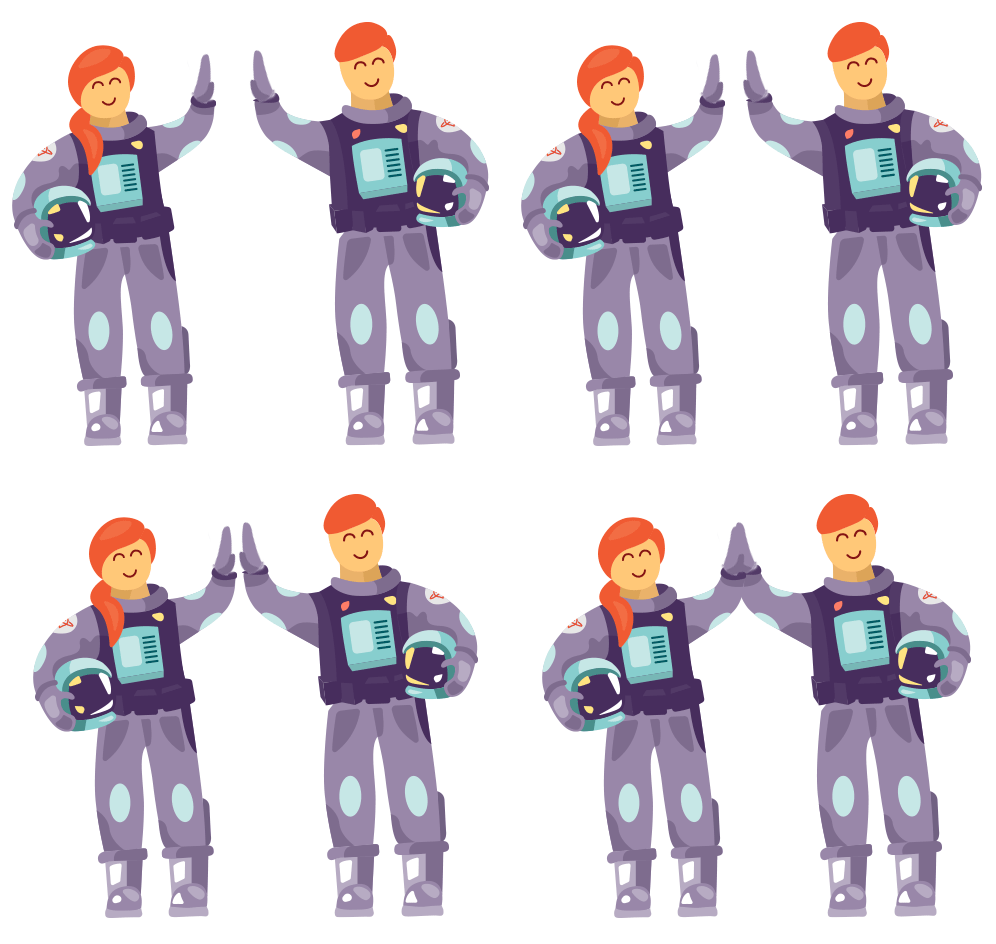
When starting to teach about personal space, a good rule of thumb is to use the length of your arms, as seen in this image.
 This picture uses the cartoon’s arms as a clear boundary for their own space. The 1.5 metre rule of social distancing can also be a good guide for personal space.
You can also include personal space when teaching about consent to emphasise that your personal space is your own and nobody should enter it unless you say OK.
This picture uses the cartoon’s arms as a clear boundary for their own space. The 1.5 metre rule of social distancing can also be a good guide for personal space.
You can also include personal space when teaching about consent to emphasise that your personal space is your own and nobody should enter it unless you say OK.
This picture uses the cartoon’s arms as a clear boundary for their own space. The 1.5 metre rule of social distancing can also be a good guide for personal space.
You can also include personal space when teaching about consent to emphasise that your personal space is your own and nobody should enter it unless you say OK.It is important to teach your child to recognise some clear signs of when they are standing too close in someone’s personal space. When a person’s space is being invaded they might:
- step or lean back
- cross their arms
- look upset
- turn away
- leave the situation
- ask you to go away
Respecting personal space is important for healthy relationships and safe social interactions in the community. This is because when someone moves into your personal space without your consent, you might feel stressed, overwhelmed or unsafe. Similarly, if you stand too close to someone without their consent, they might feel uncomfortable or upset.
Supporting your child to practice giving and receiving personal space as early as possible can give them a head start in developing skills around:
- consent
- healthy relationships
- appropriate touch – Things People Do in Relationships
- public and private behaviours

 Social Skills Picture Book